Topology Optimization
Density-based and integer-programming methods for fluid and structural systems — from turbomachinery rotors and labyrinth seals to PEMFC and SOFC channel layouts, with measurable gains in efficiency and device life.
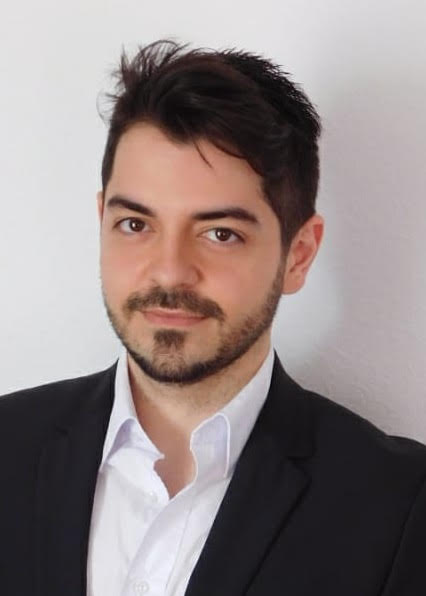
Luís F. N. Sá is a faculty member at one of Latin America’s leading engineering schools, where he bridges computational methods and real-world engineering challenges. His work sits at the intersection of topology optimization, computational fluid dynamics and machine learning — developing numerical tools that reshape how engineers design everything from biomedical implants to clean-energy devices.
Before joining the faculty in 2023, he spent more than a decade at USP as a student and researcher. His Ph.D. designed ventricular assist devices through topology optimization, showing how mathematical optimization can directly impact healthcare engineering. His postdoctoral research at the Research Centre for Gas Innovation (RCGI) broadened the scope to energy-transition problems, including CO₂ geological storage and renewable energy systems.
He leads the DO&GE Lab (Design Optimization & Generative Engineering), where the team combines classical optimization with AI-driven generative design to tackle multiphysics problems across structural, thermal and fluid domains.
Academic background
Numerical modeling, CFD and optimization for the energy transition
Thesis: Topology optimization method applied to ventricular assist device impeller and volute design
Research areas
Density-based and integer-programming methods for fluid and structural systems — from turbomachinery rotors and labyrinth seals to PEMFC and SOFC channel layouts, with measurable gains in efficiency and device life.
Laminar, turbulent and compressible flows coupled with optimization: subsonic compressible turbulence, rotor–stator interaction and multiphase transport in electrochemical devices.
Surrogate models and generative AI that accelerate optimization, predict structural performance from binary meshes and explore design spaces beyond intuition.
Ventricular assist pumps, solid oxide fuel cells, fluidic diodes for respiratory devices and MHD propulsion — wherever geometry decides performance.
In the Mechatronics Engineering program at Poli-USP I teach dynamic systems, digital electronics, microprocessors, information systems, fluid-mechanical systems and capstone projects — the same multidisciplinary mix that drives the lab.
No prior optimization experience required for undergraduates — curiosity and commitment are what matter. Graduate positions are funded through FAPESP, CNPq and CAPES.